Best Redfish Baits and Lures for Southwest Florida
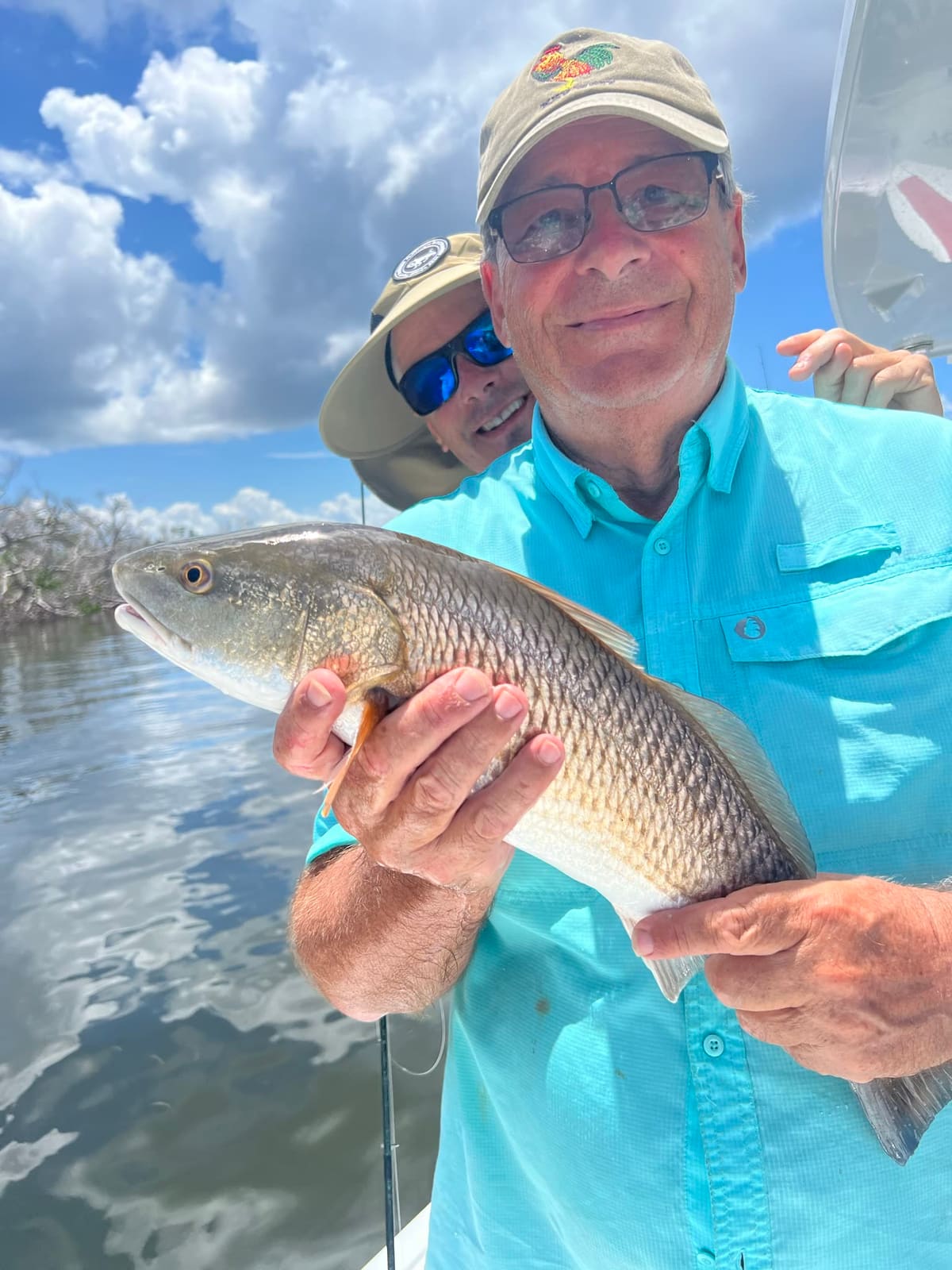
Live shrimp under a popping cork is the fastest way to a redfish on any grass flat in Southwest Florida, and a gold spoon is the fastest way to cover water when you don’t know where they’re holding. Redfish are the most forgiving inshore target in Lee, Collier and Charlotte counties: they eat a wide range of baits and lures, they’re open year round, and they’re catchable from shore. Here’s what actually works, in order of how often it produces.
1. Live shrimp on a jighead or under a popping cork
Shrimp is the closest thing to a sure bet for redfish here. Free-lined or on a light jighead it works over sand potholes and along mangrove roots; under a popping cork it covers a flat faster and calls fish in from outside casting range with the pop of the cork mimicking a baitfish on the surface. Bait shops throughout Lee, Collier and Charlotte counties sell it live, and it stays productive whether the water is gin clear or stirred up.
2. Cut ladyfish or mullet fished on the bottom
Near an oyster bar on a falling tide, cut bait fished right on bottom beats almost anything moving. Redfish key on the scent trail as water drains off the bar and pulls bait with it. This is a stationary, patient approach: cast it out, let it sit, and give it time rather than working it back in.
3. Gold spoon
Old, simple and still one of the best search baits for redfish anywhere on the Gulf coast. A gold spoon covers a flat quickly, works through grass without fouling constantly, and flashes enough to pull a red out from under mangrove shade. Keep the retrieve slow and steady rather than fast.
4. Weedless soft plastic shrimp and paddle tails
Rigged weedless on a jighead, soft plastics work potholes, oyster bars and mangrove edges without hanging up. Weedless rigging matters more for redfish than it does for most species here, because so much of their habitat is oyster shell and root structure that will eat an exposed hook on the first cast. Work them slowly, letting the bait settle into potholes rather than burning it across the top.
5. Live or cut pinfish
Bigger baits for bigger fish. A live or freshly cut pinfish fished near a dock, seawall or deeper oyster bar tends to draw the larger reds in a school rather than the smaller fish that will hit shrimp or a jig. Good choice when you’re specifically hunting size over numbers.
Where and when to use them
Tide matters more than time of day. A falling tide pulling water off an oyster bar or out of the mangroves hands feeding fish a conveyor belt, and that’s when a redfish is easiest to fool. Pick the structure first, oyster bars, mangrove edges, sand potholes on grass flats, then work out which hours the tide is actually moving water across it.
Cape Coral’s canal system holds redfish tight to seawalls and dock pilings and is fishable on foot from a lot of the city. Bunche Beach Preserve and the San Carlos Bay flats are wadeable and don’t require a boat at all. Our shore and pier fishing guide lists the specific access points that are open right now across Lee, Collier and Charlotte counties, and our redfish species guide goes deeper on tackle and technique.
Redfish feed nose-down with the tail up in shallow water, which is why sight-casters look for tails breaking the surface. If you can see one, get well ahead of it and let the bait sit in its path rather than casting on top of the fish, which usually spooks it off the flat instantly.
Current redfish regulations in Southwest Florida
Redfish harvest is open year round in the Southwest and Charlotte Harbor regions, which cover Lee, Collier and Charlotte counties. FWC lists the slot as not less than 18 inches or more than 27 inches total length, with a bag limit of one fish per person per day and a two-fish vessel limit, meaning four anglers on one boat can still only bring home two fish total. Anything outside the slot goes back regardless of how many you’ve already kept. Check the current rule at FWC’s Red Drum page before you fish, since regulations can change with only weeks of notice. Our season and regulation calendar tracks this alongside snook, trout, and grouper for the region.
Before you go
Every angler fishing from shore or a boat in Florida needs a valid fishing license, including on a catch-and-release trip. Our Southwest Florida fishing license guide covers what residents and visitors actually need, and the full regulations page has the current figures for every species covered on this site, each one linked back to the FWC page it came from.