← All species · Fishing guide

Southwest Florida · Inshore

Redfish

Also called red drum, channel bass

Open year-round in Southwest Florida, catchable from shore, and the most forgiving target on this list.

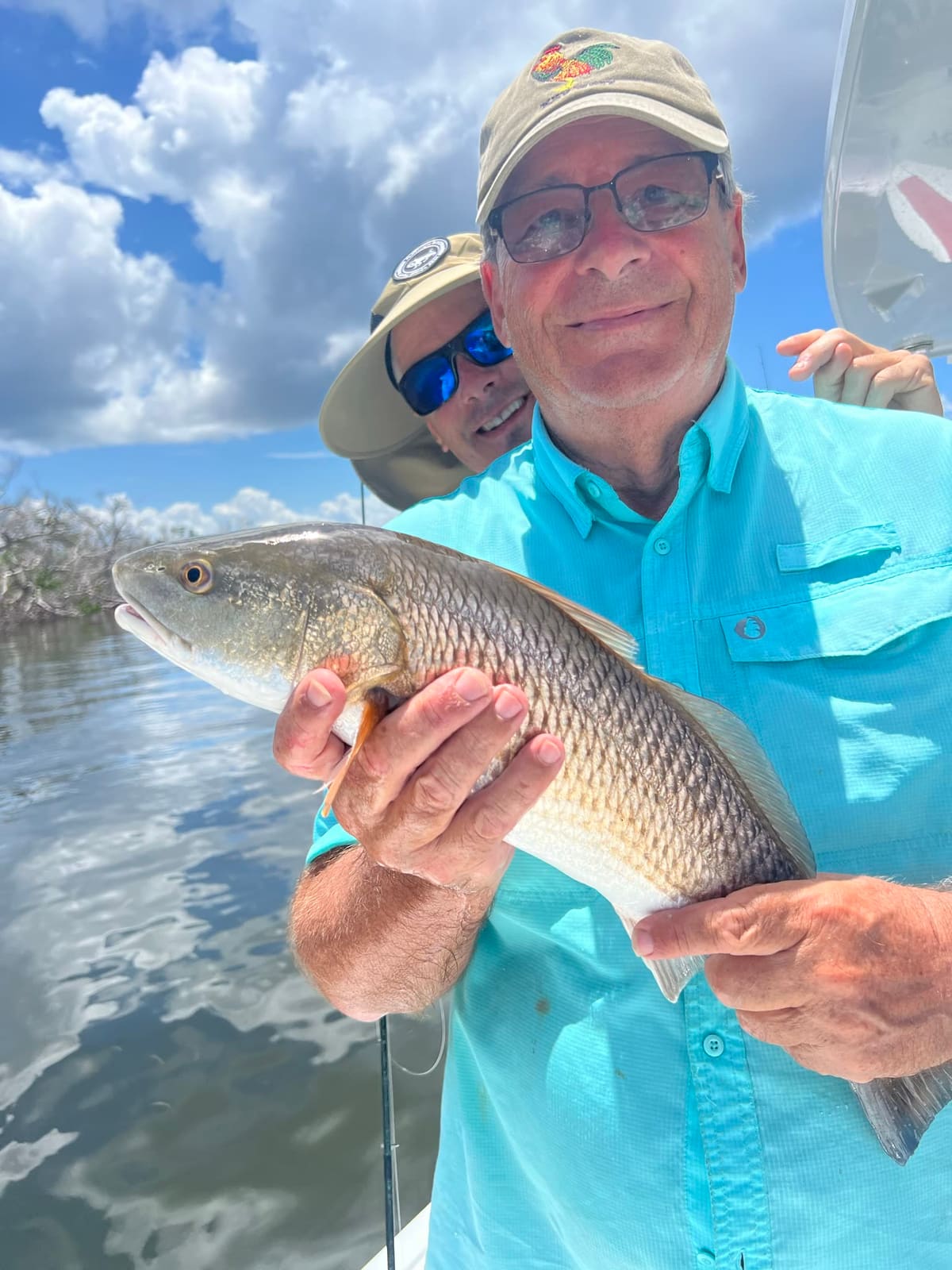
An angler holds a coppery-bronze redfish in a mangrove backwater
Redfish, backwater near Cape Coral, July 2023. Our own photograph.

Redfish harvest is open year-round in the Charlotte Harbor and Southwest regions covering Lee, Collier and Charlotte counties, with an 18"–27" slot and a limit of one per person and two per vessel. They feed on shallow flats, oyster bars and mangrove edges, which makes them the realistic target for anyone fishing without a boat.

Check the rule before you fish, every time.

The figures on this page were taken from FWC on August 3, 2026 and seasons here change year to year. FWC: Red Drum (Redfish) is the authority — a citation is written against the rule in effect that day.

Size and bag limits

Season
Open year-round (Charlotte Harbor & Southwest regions)
Slot limit
Not less than 18" or more than 27" total length
Bag limit
1 fish per person per day
Vessel limit
2 fish per vessel
Source

Full regional table: SWFL season & regulation calendar.

Where

Where to find redfish in Lee, Collier & Charlotte

Oyster bars on a falling tide
Bars in Pine Island Sound and Estero Bay concentrate bait as water drains off them.
Mangrove edges at high water
Fish push right up into the roots when there is enough water to swim there, then pull out as it falls.
Sand potholes on grass flats
Light-coloured holes in dark grass show fish clearly and are the easiest sight-fishing in the region.
Cape Coral canal seawalls
Canal redfish sit tight to structure and around dock pilings, catchable on foot from a lot of the city.
Bunche Beach and San Carlos Bay flats
Wadeable, no boat required, and holds fish on the right tide.

Catchable from shore at Bunche Beach Preserve (San Carlos Bay), Cape Coral Yacht Club Fishing Pier, Ponce de Leon Park (Punta Gorda), Caxambas Park (Marco Island) — access, parking and pier details on our Southwest Florida shore spots page.

When

When they bite

Fish move with water temperature, not the calendar. These windows are guidance, and a cold front or a warm winter shifts every one of them.

Year-round
No closed season in the Southwest and Charlotte Harbor regions. This is the fish that gives you a legal option any week of the year.
September – November
The best of it. Bigger fish school up, water is still warm, and the flats fish well through the fall.
December – February
Cooler water pushes fish onto dark bottom that warms fastest in the afternoon sun. Fish later in the day, not at dawn.
March – August
Reliable on tide and structure. Summer afternoons get brutal — go early or go late.
Tackle & bait

What to fish

Tackle

  • 7' medium spinning rod with a 2500–3000 size reel is plenty
  • 10–15 lb braid with 20–30 lb fluorocarbon leader
  • Weedless rigging matters more than it does for most species — these fish live in oysters and roots

Baits and lures

  • Live or cut shrimp on a jighead or under a popping cork
  • Cut ladyfish or mullet on the bottom near a bar
  • Gold spoon — old-fashioned, still works, and covers water fast
  • Soft plastic shrimp imitations worked slowly across potholes

Rig it with the knots we actually use — leader-to-braid and hook knots, with text steps.

How

How to fish for redfish

Tide beats time of day. A falling tide pulling water off an oyster bar or out of the mangroves hands feeding fish a conveyor belt of bait, and that is when a red is easiest to fool. Pick the bar or the shoreline first, then work out which hours of the day the tide is actually doing that.

Redfish feed nose-down with their tail up in shallow water, which is why "tailing" is the thing everyone looks for. If you can see tails, get well ahead of the fish and let it swim to the bait — a cast that lands on top of one clears the flat instantly.

In the canals, treat every dock piling and seawall corner as a spot rather than fishing the open middle. Fish sit on the shade line and the structure, and a bait that swims past within a foot of it gets eaten far more often than one that does not.

Common questions

What people get wrong

Casting at the fish instead of ahead of it
Lead a moving red by six to ten feet and let it find the bait.
Fishing the middle of a flat
Edges produce: oyster bars, potholes, mangrove lines, drop-offs. Featureless bottom rarely does.
Keeping an oversized fish
Anything over 27" goes back. Big breeding reds are outside the slot and illegal to keep.
Ignoring the vessel limit
Two fish per vessel, not two per angler. Four people on one boat still means two fish total.

Regulation figures retrieved from FWC: Red Drum (Redfish) on August 3, 2026. Everything else on this page is fishing guidance, not a sourced claim, and is written as such: no catch statistics, no invented studies. Seasons and limits change — verify at myfwc.com before you keep a fish.