Types of Grouper in Florida: How to Tell Them Apart
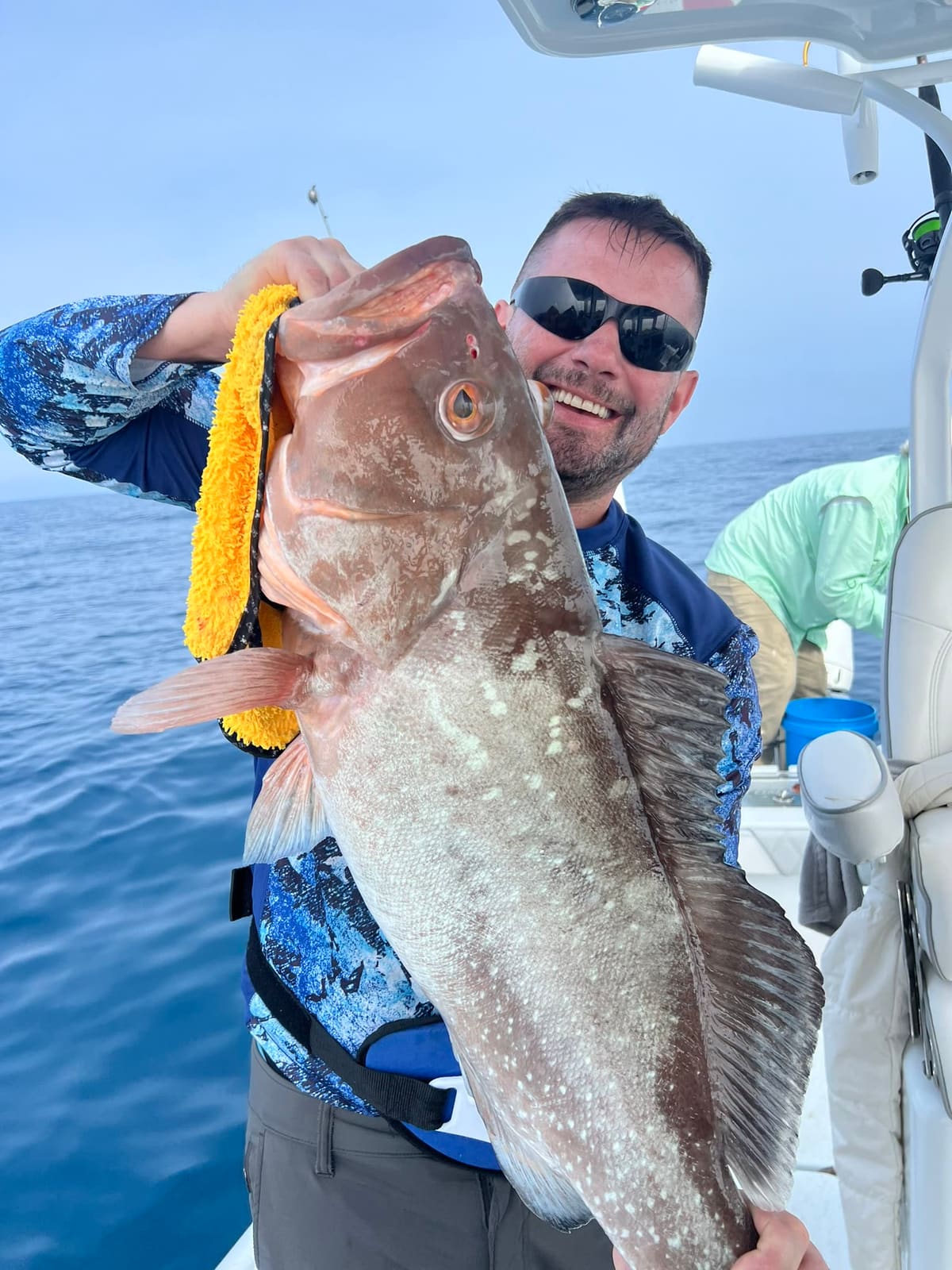
Gag, red and black grouper get lumped together as “grouper” on most boat rails, but they’re different fish with different markings, different seasons and, in a couple of cases, completely different rules about whether you can keep one at all. Here’s how to tell the common Gulf species apart, and what FWC currently allows for each.
1. Gag grouper
Gag are grayish-brown with faint, worm-like or brick-shaped markings running across the body, and a dark blotch at the rear base of the dorsal fin is a reliable field mark. The tail, anal and pelvic fins usually show a dusky to blackish margin. Gag are the species most Southwest Florida boats target offshore, and they’re also the fish that will bury you in structure the moment they feel the hook.
2. Red grouper
Red grouper run reddish-brown to brick red with paler blotches scattered across the body, and the inside of the mouth is a distinctive orange-red. The body profile is straighter and less elongated than a gag’s, and there’s often a dark margin along the edge of the gill cover. Red grouper tend to hold on flatter hard bottom rather than the jagged ledges gag prefer, which is part of why the two get targeted with slightly different tactics even on the same trip.
3. Black grouper
Black grouper carry dark, rectangular or chain-like blotches arranged in rows down a grayish body, often with brassy or bronze spots scattered across the head. Fin margins tend toward reddish-brown rather than the gag’s dusky black. Black grouper get considerably larger than gag or red on average and are a stronger, harder-pulling fish for their size.
4. Scamp
Scamp are pale gray to tan and covered in small, densely packed dark spots rather than blotches, which is the easiest way to separate them from the other three at a glance. Larger scamp often show elongated, streamer-like tips on the tail fin. They’re less commonly targeted specifically but show up regularly as bycatch on the same structure as gag and red grouper.
5. Yellowfin grouper
Yellowfin grouper are reddish-brown with pale spots, and the field mark is right in the name: a yellow-edged pectoral fin that’s usually visible even in a quick boat-side photo. They’re less common inshore of the deeper reefs but worth knowing on sight since their regulations differ from the more commonly caught species.
6. Nassau and goliath grouper: don’t keep these
Nassau grouper and goliath grouper are both grouper species you may encounter but cannot legally take home. FWC lists Nassau grouper harvest as prohibited outright, and goliath grouper harvest as prohibited without a specific permit through FWC’s Goliath Harvest Program. Both are catch-and-release only for the overwhelming majority of anglers, regardless of size or how the general grouper season is running. If you’re unsure what you’ve got at the rail, treat it as a release fish and sort out the identification with the fish in the water.
Current Gulf state-water grouper regulations
Every grouper species in Gulf state waters, which covers the offshore structure off Lee, Collier and Charlotte counties, shares a combined aggregate bag limit: no more than 4 grouper total per person per day across whichever of these species you keep, on top of each species’ own individual limit. As of this writing, gag grouper is open in Gulf state waters only from September 1 through September 30, 2026, closing again October 1 for the rest of the year, with a 24 inch minimum and up to 2 gag counted within that 4-fish aggregate. Red grouper is open year round in Gulf state waters with a 20 inch minimum, and black grouper is open year round with a 24 inch minimum. Scamp and yellowfin grouper are open in Gulf state waters with a 16 inch and 20 inch minimum respectively, each counted within the same 4-fish aggregate. Charter captains and crew carry a zero-fish bag limit on grouper regardless of species. These figures move; confirm the current status at FWC’s Groupers page before every trip, and see our gag grouper species guide for tackle and technique once you know the season is open.
Before you go
Grouper regulations change more often than most Southwest Florida species and the window can be a matter of weeks. Our season and regulation calendar tracks gag grouper alongside snook, redfish and the rest of the region’s core species, and the full regulations page lists every current figure with the FWC source it came from. A Florida saltwater fishing license is required regardless of season status; check what you need on our fishing license guide.